

DRAM
Stands for "Dynamic Random Access Memory."
DRAM is a type of volatile memory used as the main system RAM in most computers, smartphones, and tablets. It is much less expensive to manufacture than Static RAM (SRAM), and can store data more densely by using memory cells containing tiny electrical capacitors. However, since these capacitors leak their electrical charge over time, a DRAM chip must constantly refresh its contents to maintain each capacitor's charge.
Each memory cell in a DRAM chip consists of a capacitor that stores an electrical charge and a transistor that controls the power flow into the capacitor. Digital data is binary and consists of groups of bits with two possible values (0 and 1). If a memory cell's capacitor carries an electric charge, its bit has a value of 1; if it does not, its bit has a value of 0. To maintain each cell's contents, a memory refresh circuit reads the electrical charge from each cell, amplifies it, and then writes it back to the cell in a process that repeats many times each second. A single DRAM memory cell can hold its charge for up to 64 milliseconds, and since each DRAM chip contains billions of cells, it is constantly refreshing large groups of cells at a time.
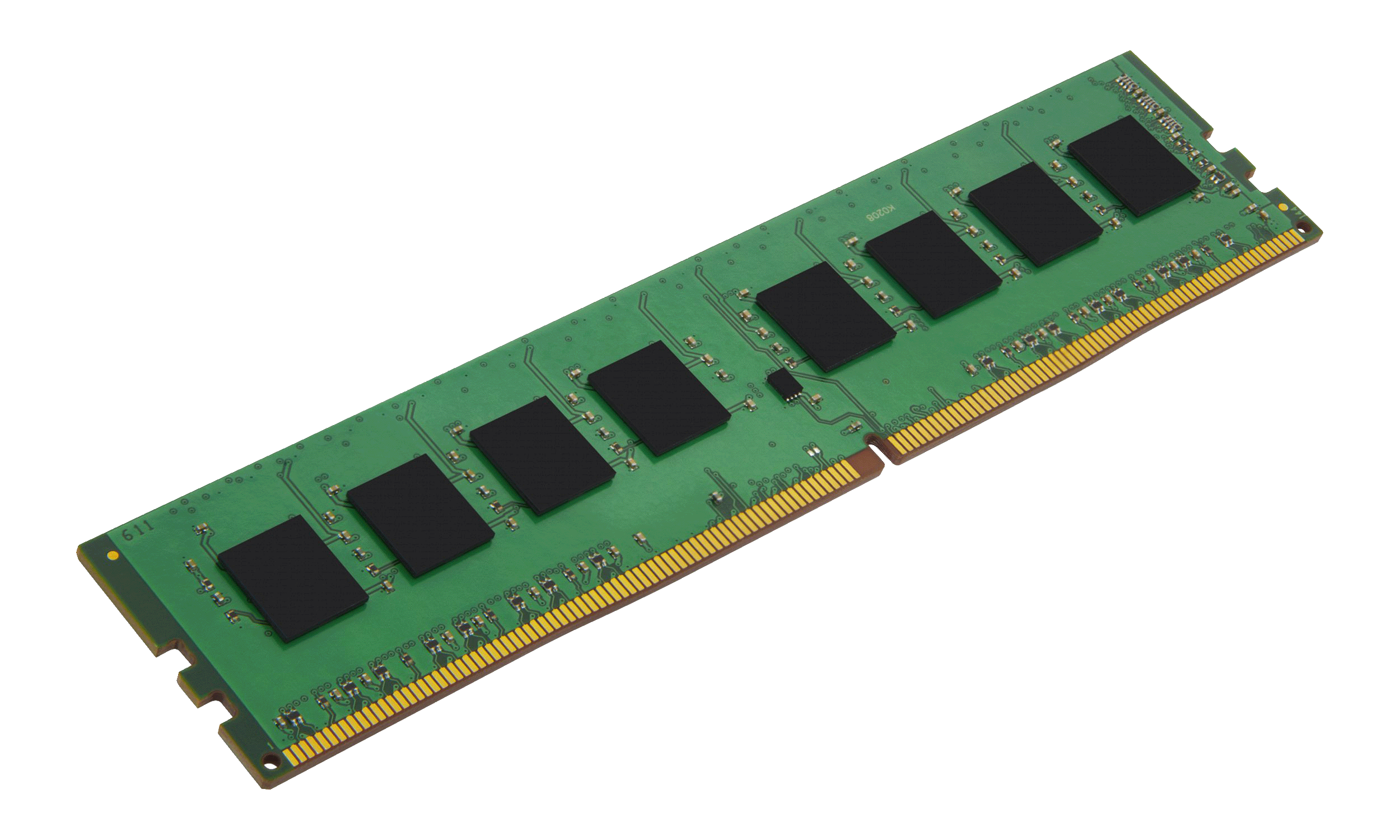
Like other computer components, DRAM technology is constantly seeing improvements. Early asynchronous DRAM was phased out in favor of faster, more efficient synchronous DRAM (SDRAM). Multiple generations of DDR SDRAM have improved data transfer rates even further. DRAM is used as the primary system RAM in computers and as video RAM on graphics cards, but is also found in other types of electronic devices like networking equipment, digital cameras, printers, and gaming consoles.
 Test Your Knowledge