

DDR2
Stands for "Double Data Rate 2."
DDR2 RAM was the second-generation version of DDR (Double Data Rate) memory and offered higher speeds and improved efficiency than the original DDR standard. It was common in desktop and laptop computers from about 2004 through 2009, before being replaced by DDR3.
Like standard DDR memory, DDR2 transfers data on both the rising and falling edges of each clock cycle, effectively doubling the data rate compared to single-data-rate memory. Because DDR2 is a type of SDRAM (Synchronous Dynamic Random Access Memory), it stays synchronized with the system clock, allowing it to operate efficiently at higher speeds.
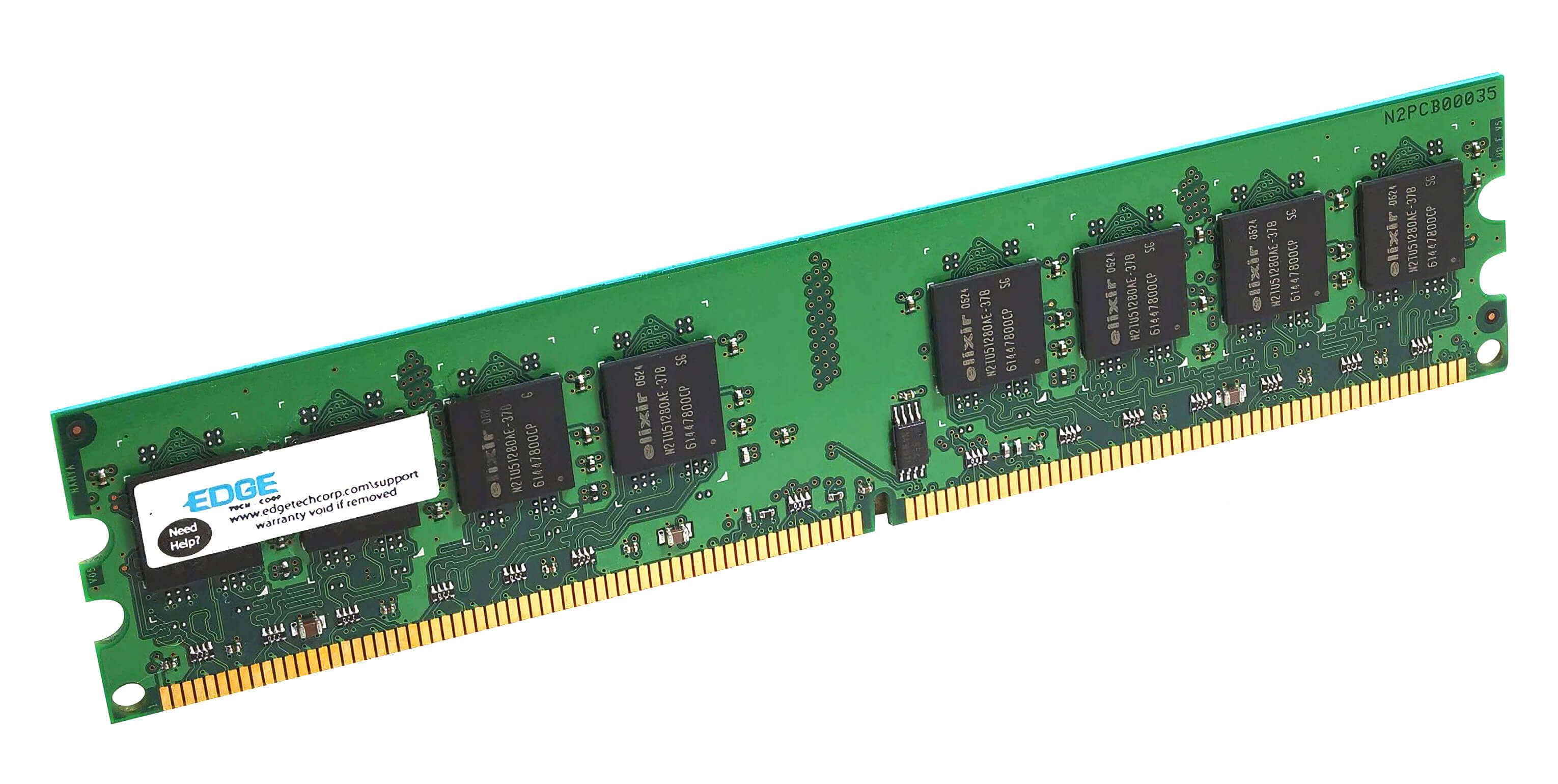
DDR2 speeds include:
- DDR2-400 (PC2-3200) - 400 MT/s or 3,200 MB/s
- DDR2-533 (PC2-4200) - 533 MT/s or 4,266 MB/s
- DDR2-667 (PC2-5300) - 667 MT/s or 5,333 MB/s
- DDR2-800 (PC2-6400) - 800 MT/s or 6,400 MB/s
- DDR2-1066 (PC2-8500) - 1066 MT/s or 8,533 MB/s
DDR vs DDR2 Memory
While DDR and DDR2 use similar technology, DDR2 has an improved internal design that uses less power. Standard DDR typically operates at 2.5 volts, while DDR2 uses 1.8 volts, reducing heat output and improving energy efficiency. DDR2 also features a higher prefetch buffer, enabling more data to be transferred per clock cycle and increasing overall memory bandwidth.
NOTE: Since DDR2 uses a different notch position and signaling standard than DDR and DDR3, the modules are not interchangeable. They each require a compatible motherboard slot. Before upgrading memory, always verify which RAM standard your system supports.
 Test Your Knowledge