

Refresh Rate
A refresh rate is the number of times per second a display updates the image on the screen. It is measured in hertz (Hz), so 60 Hz means the display refreshes 60 times per second. Common refresh rates for modern displays include 60 Hz, 75 Hz, 120 Hz, 144 Hz, 165 Hz, and 240 Hz. 60 and 120 hertz are the most common for smartphones, laptops, and computer monitors.
Higher refresh rates produce smoother motion and may appear more responsive. For example, scrolling through a webpage, social media feed, or photo gallery on a smartphone is noticeably smoother at 120 Hz than at 60 Hz. Similarly, moving the cursor across a computer screen or navigating a user interface feels more fluid at higher refresh rates. In video games, higher refresh rates improve motion clarity and can reduce perceived input lag, especially when paired with a GPU capable of generating a high frame rate.
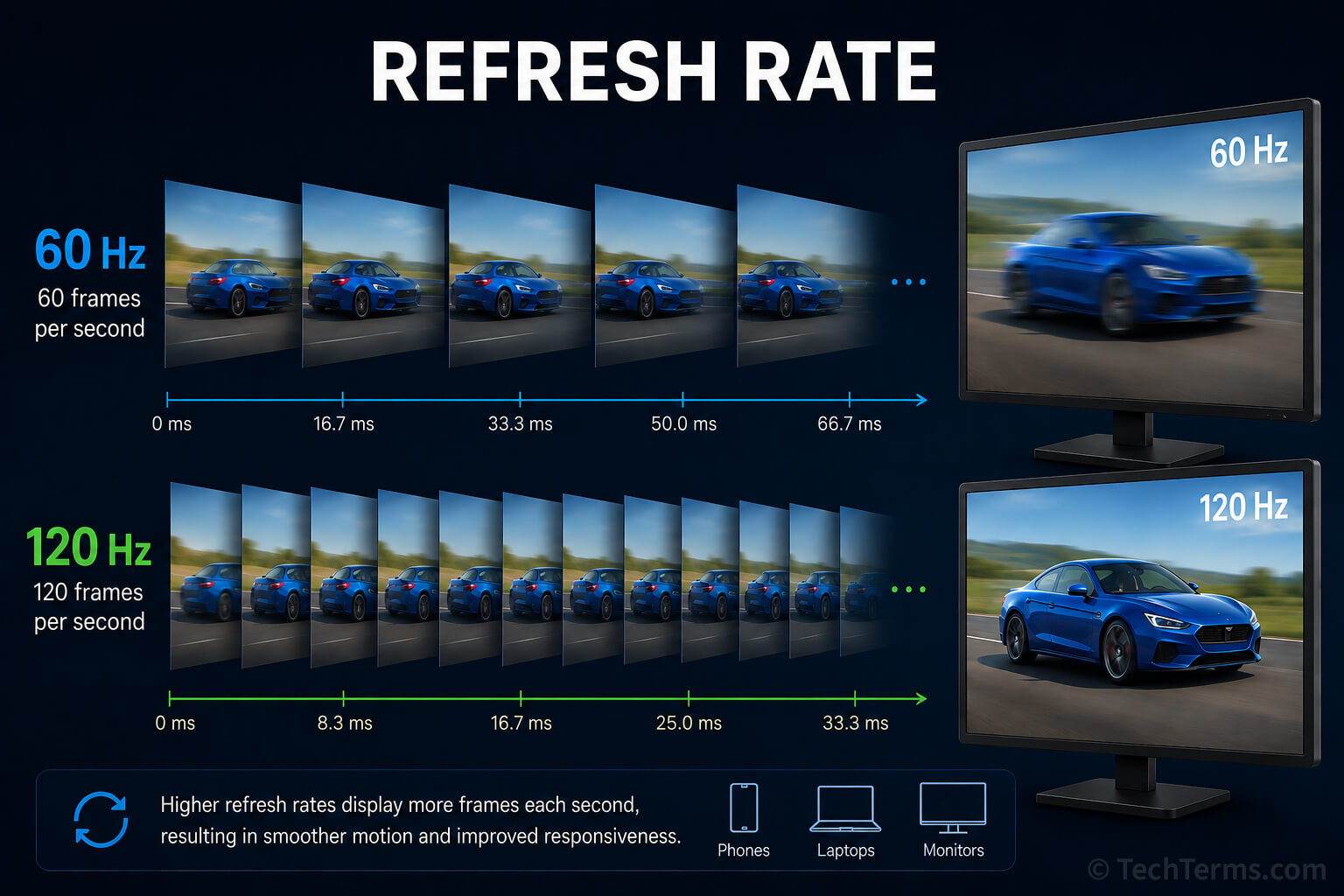
The actual refresh rate you experience depends on both the display and the video source. For instance, a monitor may support a 144 Hz refresh rate, but it will only be noticeable if the connected device can output video at that refresh rate.
CRT, LCD, and OLED Refresh Rates
Historically, refresh rates were especially important for CRT monitors. Because CRT displays continuously redrew the image using an electron beam, low refresh rates often caused noticeable "flicker." A refresh rate of 75 Hz or higher was often required to create a more stable image and reduce eye fatigue.
Most modern LCD and OLED displays support multiple refresh rates. Unlike older CRT monitors, these displays generally do not produce visible flicker because the pixels remain illuminated between screen updates. As a result, higher refresh rates are primarily valued for smoother, more natural motion rather than for reducing eye strain.
 Test Your Knowledge